Welcome to Cloud Dragon
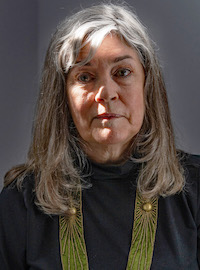
Invocation of the Lunar Dharma
Cloud Dragon : The Joan Sutherland Dharma Works was created to make the groundbreaking teachings of Joan Sutherland, Roshi widely available. Her work is a fresh imagining of the koan tradition, rooted in its original understanding of all of life as a process of awakening. Endarkenment is as essential as enlightenment to awakening, and much of her work is an exploration of the power held in the radiance of the dark.
Since her retirement in 2014, Cloud Dragon is the place to access Joan Sutherland's writings, videos, and the audio archive of her talks and readings, as well as a growing body of transcripts of those talks. For ongoing practice there’s The Open Source network of communities, led by her dharma heirs. See the window below, Places to Go, for more information.
Announcements & Recent Online Talks
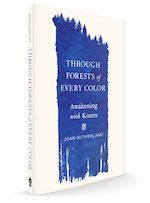
Through Forests of Every Color is available for purchase at Shambhala Publications. The audiobook is on Audible"A clearer path or a better guide would be hard to find," says Red Pine.
Joan Sutherland, Interview and Q&A with Jon Korp
Sit-Heads Meditation Group, 2023
WATCH HERE
A Conversation with The Open Source Community
Hosted by Megan Rundel and The Open Source Teachers, 2022
WATCH HERE
On Awakening with Koans, Joan Sutherland and Megan Rundel
California Institute of Integral Studies, 2022
WATCH HERE
Zen Luminaries : Joan Sutherland in Conversation with Jon Joseph
Pacific Zen Institute, 2022
WATCH HERE
Awakening with Koans : A Conversation with Joan Sutherland
Tricycle Magazine, 2022. Video will be available soon.
Gates, our Miscellaneous Koans collection, is now available free of charge as a PDF in the old Acequias & Gates format.

Koans ... Awakening ... Where to begin?
Here are links to a few essays and recordings that introduce the philosophy and practices that are essential to our Way.
The Radiance of the Dark from The Joan Sutherland Dharma Works on Vimeo.
A short video evoking Joan's vision embracing endarkenment as well as enlightenment.More Videos

New writing every couple of weeks, from fields notes and journal entries to larger works in progress. Read here.
Sign up for our email list
Subscribe for monthly recordings of talks, readings, and surprises.
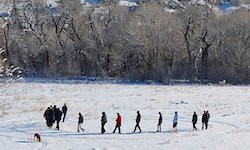
The Open Source communities and teachers in New Mexico, Colorado, Arizona, and California